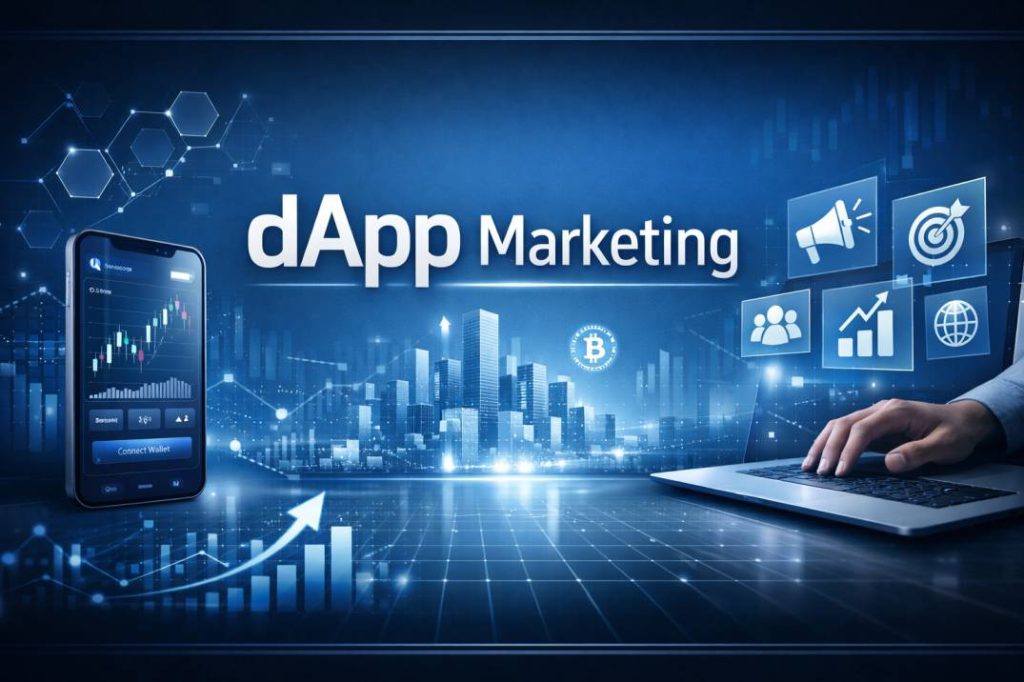
Decentralized applications (dApps) are blockchain-powered platforms that operate without centralized control, enabling users to interact directly through smart contracts. Unlike traditional apps, dApps provide greater transparency, security, and user ownership of data and assets. From decentralized finance (DeFi) and NFT marketplaces to blockchain gaming and social platforms, dApps are transforming how digital services are built and used. However, creating a powerful dApp is only part of the journey success also depends on how effectively it reaches and engages its target audience.
Marketing a dApp is often more complex than promoting traditional applications because Web3 audiences expect transparency, technical clarity, and strong community involvement. Startups must overcome challenges such as building trust in a decentralized ecosystem, educating users about blockchain concepts, encouraging adoption, and nurturing active communities across platforms like Discord and X (Twitter). A successful dApp marketing campaign combines strategic storytelling, community-first engagement, educational content, partnerships, and data-driven growth tactics to attract users and sustain long-term adoption.
Understand Your Target Audience
Identify Your Ideal Users
To effectively market a dApp, startups must first identify who their ideal users are. The Web3 ecosystem includes different types of audiences, such as crypto-native users who are already familiar with blockchain technologies and mainstream users who may be exploring decentralized platforms for the first time. Additionally, the audience may vary depending on the dApp’s purpose developers interested in building on the platform, traders looking for DeFi opportunities, gamers exploring blockchain-based games, or NFT collectors seeking digital assets. Clearly defining these user segments helps startups tailor messaging, features, and campaigns that resonate with the right audience.
Analyze User Behavior
Understanding user behavior is crucial for creating an effective marketing strategy. Web3 users tend to spend time on specific platforms such as Discord, X (Twitter), Telegram, and Reddit, where they discuss projects, share insights, and engage with communities. By analyzing how users interact on these platforms and what content attracts their attention, startups can identify what motivates them whether it’s financial incentives, real-world utility, technological innovation, or exclusive opportunities. This insight allows marketing teams to craft campaigns and communications that align with user expectations and preferences.
Create User Personas
Creating detailed user personas helps startups better understand their audience and design more targeted marketing strategies. A user persona represents a typical user segment and includes information such as goals, motivations, technical knowledge, and preferred platforms. By defining the key pain points users face such as complex onboarding processes, lack of trust, or limited understanding of blockchain technology startups can also identify potential adoption barriers. Addressing these challenges through better messaging, user education, and simplified experiences can significantly improve user engagement and retention.
Define Clear Marketing Goals
Establish Key Objectives
A successful dApp marketing campaign begins with clearly defined objectives that align with the project’s overall vision and growth strategy. These objectives may include acquiring new users, increasing token adoption within the ecosystem, expanding and engaging the community, and building strategic partnerships with other Web3 projects or platforms. By establishing clear goals, startups can focus their marketing efforts on activities that directly contribute to the project’s growth and long-term sustainability.
Set KPIs
Once marketing objectives are defined, startups should establish measurable key performance indicators (KPIs) to track progress and evaluate campaign success. In the Web3 space, common KPIs include the number of wallet connections to the dApp marketing agency, daily active users (DAU), transaction volume on the platform, and the level of community engagement across social channels. Monitoring these metrics helps teams understand which marketing strategies are working, identify areas for improvement, and continuously optimize campaigns for better results.
Build a Strong Web3 Brand Identity
Create a Compelling Narrative
A strong brand narrative helps a dApp stand out in the competitive Web3 ecosystem. Startups should clearly communicate the vision and mission of their project, explaining why the dApp exists and what problem it aims to solve. A compelling narrative also highlights the project’s unique value proposition what makes it different from other blockchain applications and why users should choose it. By telling a clear and authentic story, startups can connect with their audience, build emotional engagement, and position their project as a meaningful innovation in the Web3 space.
Design a Memorable Brand
A memorable brand identity plays an important role in how users perceive and recognize a dApp. This includes creating a professional logo, consistent visual identity, and a cohesive design language that reflects the project’s personality and values. Along with visuals, the tone and messaging used across marketing channels should remain consistent, whether it’s educational, technical, or community-focused. A well-designed brand helps establish credibility, makes the project more recognizable, and ensures that messaging resonates with both crypto-native audiences and new users entering the Web3 ecosystem.
Establish Trust
Trust is one of the most critical factors for success in Web3, where users are often cautious about new projects. Startups can build credibility by maintaining transparency about their roadmap, development progress, and long-term plans. Highlighting the experience and credibility of the founding team also reassures users and investors about the project’s reliability. Additionally, conducting and publicly sharing security audits demonstrates a commitment to safety and responsible development, helping users feel more confident interacting with the dApp.
Develop a Community-First Marketing Strategy
Launch Community Channels
Community is the foundation of most successful Web3 projects, making it essential for startups to establish dedicated communication channels. Platforms such as Discord, Telegram, X (Twitter), and Reddit allow projects to directly engage with users, share updates, and foster discussions around the dApp. These channels create a space where early adopters and supporters can interact with the team, ask questions, and stay informed about project developments. A well-managed community platform helps build loyalty, encourages user advocacy, and strengthens the overall ecosystem around the dApp.
Encourage Participation
Active community participation is key to maintaining long-term engagement and enthusiasm around a dApp. Startups can encourage involvement by hosting community AMAs (Ask Me Anything sessions), where founders and developers answer questions and share insights about the project. Introducing governance voting mechanisms also allows users to have a voice in decision-making, reinforcing the decentralized nature of Web3. Additionally, creating feedback loops—where community suggestions are acknowledged and implemented helps users feel valued and strengthens their connection to the project.
Reward Early Supporters
Rewarding early supporters is an effective way to build momentum and loyalty during the early stages of a dApp’s growth. Incentives such as airdrops, NFT rewards, and exclusive access to features or events can motivate users to join and actively participate in the ecosystem. These rewards not only recognize early adopters but also encourage word-of-mouth promotion as community members share their experiences with others. By creating meaningful incentives, startups can strengthen community engagement and accelerate user adoption.
Content Marketing for dApps
Educational Content
Educational content plays a crucial role in helping users understand how a dApp works and why it is valuable. Since many potential users may still be unfamiliar with blockchain technology, startups should create beginner-friendly guides that explain how to use the dApp step by step. This can include onboarding tutorials, wallet connection guides, and walkthroughs of key features. Additionally, publishing clear explanations of blockchain concepts such as smart contracts, token utilities, and decentralized finance can reduce confusion and make the platform more accessible to both crypto-native users and newcomers.
Thought Leadership
Establishing thought leadership helps position a dApp startup as an authority in the Web3 space. Founders and team members can share insights about the project’s vision, technological innovations, and lessons learned while building in the blockchain ecosystem. Publishing content on emerging industry trends, market developments, and future opportunities in Web3 can also attract attention from developers, investors, and early adopters. By consistently sharing valuable insights, startups can strengthen their credibility and build stronger connections with the broader blockchain community.
SEO Strategy
A strong SEO strategy helps dApp startups increase visibility and attract organic traffic from users searching for Web3-related solutions. Publishing well-optimized blog posts, detailed tutorials, and informative case studies can help projects rank for relevant keywords related to blockchain, DeFi, NFTs, or other niche areas. Tutorials can guide users through specific use cases of the dApp, while case studies can demonstrate real-world benefits and success stories. Consistent content creation combined with proper keyword optimization ensures the project remains discoverable in search engines and reaches a wider audience.
Influencer and KOL Partnerships
Collaborate with Crypto Influencers
Partnering with crypto influencers and key opinion leaders (KOLs) can significantly expand the reach of a dApp marketing campaign. Influencers on platforms like YouTube often provide in-depth project reviews and tutorials, helping audiences understand how the dApp works. Twitter/X analysts frequently discuss emerging blockchain projects and trends, making them valuable partners for spreading awareness. Additionally, Web3 educators who specialize in simplifying complex blockchain topics can introduce the project to new audiences and build credibility through trusted recommendations.
Leverage Micro-Influencers
While large influencers can provide broad visibility, micro-influencers often deliver stronger engagement and higher conversion rates. These creators typically have smaller but highly focused audiences within niche communities such as DeFi traders, NFT collectors, or blockchain developers. Because their followers trust their opinions and expertise, recommendations from micro-influencers can feel more authentic and persuasive. For dApp startups, collaborating with multiple micro-influencers can help build awareness within specific communities and attract users who are genuinely interested in the project.
Host Collaborative Events
Hosting collaborative events with influencers and Web3 partners is an effective way to engage audiences and build stronger community connections. Events such as joint AMAs allow influencers and project teams to answer questions, explain features, and discuss the dApp’s roadmap in real time. Twitter Spaces and similar live discussions provide another platform for open conversations with the community, enabling users to interact directly with project leaders and industry experts. These events create transparency, encourage participation, and help generate excitement around the project.
Launch Campaigns and Growth Programs
Airdrop Campaigns
Airdrop campaigns are one of the most common growth strategies used by Web3 startups to attract early users and generate interest in a dApp. By distributing free tokens or rewards to users who complete specific tasks such as connecting their wallets, performing transactions, or engaging with the platform projects can incentivize initial activity and encourage users to explore the ecosystem. Well-structured airdrop campaigns not only boost wallet interactions but also help build early momentum and increase awareness within the crypto community.
Referral Programs
Referral programs encourage existing users to promote the dApp by rewarding them for inviting others to join the platform. When users share referral links with friends, communities, or social networks, they can earn incentives such as tokens, platform rewards, or exclusive benefits for each successful signup or transaction. This strategy leverages word-of-mouth marketing, which is highly effective in the Web3 space where trust and peer recommendations play a significant role in adoption. A strong referral system can help startups expand their user base organically.
Ambassador Programs
Ambassador programs involve recruiting passionate community members who actively promote the dApp within their networks. These ambassadors act as advocates for the project by creating content, moderating communities, organizing local events, and spreading awareness across social platforms. In return, they may receive rewards such as tokens, exclusive NFTs, early access to features, or recognition within the community. By empowering dedicated supporters to represent the brand, startups can strengthen community engagement and extend their reach across different regions and audiences.
Strategic Partnerships
Partner With Other Web3 Projects
Strategic partnerships with other Web3 projects can significantly accelerate the growth of a dApp by expanding its ecosystem and user base. Collaborating with DeFi protocols, NFT projects, or blockchain gaming platforms allows startups to tap into established communities and create new use cases for their technology. These partnerships can lead to cross-promotions, joint campaigns, or integrated features that enhance the overall value of the platform while strengthening its position within the broader Web3 landscape.
Ecosystem Integrations
Integrating with key components of the Web3 infrastructure can improve usability and accessibility for dApp users. Partnerships with wallet providers make it easier for users to connect and interact with the platform, while integrations with Layer 2 networks can improve scalability and reduce transaction costs. Additionally, cross-chain bridges enable users to move assets across different blockchains, expanding the dApp’s reach beyond a single network. These ecosystem integrations enhance the user experience and help position the dApp as a more versatile and accessible platform.
Measure, Analyze, and Optimize
Track Marketing Performance
Tracking marketing performance is essential for understanding how well a dApp marketing campaign is working. Web3 startups can use on-chain analytics to monitor user interactions such as wallet connections, transaction activity, and smart contract usage. In addition to blockchain data, community growth metrics—such as Discord member activity, Telegram engagement, and social media interactions can provide insights into how effectively the project is building and maintaining its audience. By regularly reviewing these metrics, teams can identify successful strategies and areas that require improvement.
Optimize Campaigns
Continuous optimization is necessary to ensure marketing campaigns remain effective and relevant. Startups can improve performance by conducting A/B tests on different marketing messages, visuals, or calls to action to determine which versions resonate best with users. Additionally, improving the onboarding process such as simplifying wallet connections, providing step-by-step tutorials, or reducing friction during the first interaction can significantly increase user retention and engagement. These small adjustments can lead to meaningful improvements in overall campaign results.
Use Web3 Analytics Tools
Web3 analytics tools help startups gain deeper insights into user behavior and ecosystem performance. Platforms like Dune Analytics allow teams to create custom dashboards and analyze on-chain data in real time. Nansen provides advanced blockchain analytics and wallet tracking that can reveal trends and user activity patterns. Meanwhile, Token Terminal offers financial and usage metrics for blockchain projects, helping teams evaluate growth and market positioning. Using these tools enables startups to make data-driven decisions and refine their marketing strategies for better outcomes.
Conclusion
A successful dApp marketing campaign requires more than just promoting a product it involves building trust, educating users, and creating a strong community around the project. By understanding the target audience, defining clear marketing goals, developing a strong Web3 brand identity, and implementing community-first strategies, startups can effectively drive awareness and adoption. Combining content marketing, influencer collaborations, growth programs, and strategic partnerships further strengthens the project’s reach within the Web3 ecosystem. Most importantly, continuously measuring performance and optimizing campaigns through data-driven insights ensures sustainable growth and long-term success for decentralized applications.