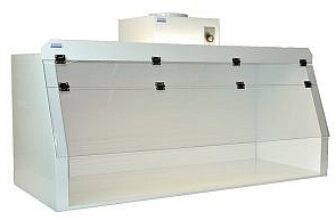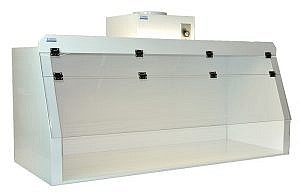
Etching operations involve aggressive chemicals that can release corrosive fumes, vapors, and potentially hazardous airborne contaminants. Whether you work with acids in semiconductor manufacturing, electronics production, metal processing, or laboratory research, selecting the right fume hood is essential for protecting personnel and maintaining a safe working environment. However, conventional metal fume hoods may deteriorate when repeatedly exposed to certain corrosive chemicals. Choosing a polypropylene fume hood helps you address these challenges by providing chemical-resistant construction designed for demanding laboratory applications.
To select the right system, you need to evaluate chemical compatibility, airflow performance, hood dimensions, exhaust requirements, and operational safety. This guide explains how to choose a polypropylene fume hood for etching operations and make a practical investment for your laboratory.
1. Evaluate Chemical Compatibility Before Selecting a Hood
Your first consideration should be the chemicals used during etching. Common etching processes involve hydrochloric acid, sulfuric acid, nitric acid, hydrofluoric acid, and other corrosive solutions.
Polypropylene is widely used in corrosive environments because it offers resistance to many acids, alkalis, and chemical solutions. Unlike conventional metal construction, polypropylene does not rust and can provide better resistance to numerous corrosive substances.
Before purchasing a hood, identify:
- The chemicals used in your etching process.
- Chemical concentrations and operating temperatures.
- Potential chemical splash and spill exposure.
- The frequency and duration of chemical handling.
- Whether multiple chemicals will be used simultaneously.
Always verify material compatibility against the manufacturer’s chemical resistance data. Compatibility depends on concentration, temperature, exposure duration, and operating conditions.
2. Choose the Appropriate Hood Size
Your polypropylene fume hood should provide enough working space for etching equipment, chemical containers, and accessories without creating unnecessary obstructions.
An undersized hood can restrict operator movement and interfere with safe chemical handling. An oversized hood may increase installation costs and ventilation requirements.
Consider these factors when determining the appropriate dimensions:
Work surface area: Measure the footprint of your etching equipment and chemical containers.
Interior height: Ensure sufficient clearance for vessels and process equipment.
Working depth: Allow comfortable access without placing materials too close to the sash opening.
Equipment arrangement: Account for hot plates, chemical baths, and other instruments.
Future requirements: Consider potential changes in your laboratory workflow.
Select a configuration that supports your current procedures while allowing reasonable flexibility for future applications.
3. Examine Airflow and Exhaust Performance
Effective airflow is essential when handling corrosive chemicals. Your fume hood should capture and remove hazardous vapors before they enter the laboratory environment.
When evaluating a polypropylene fume hood, examine its ventilation design and exhaust requirements.
Important considerations include:
- Designed face velocity and airflow specifications.
- Uniform airflow distribution across the working opening.
- Proper exhaust duct sizing.
- Compatibility with the building’s ventilation system.
- Appropriate exhaust fan capacity.
- Airflow monitoring and alarm options.
Do not assume that a higher face velocity automatically provides better protection. Excessive airflow can create turbulence and reduce containment effectiveness.
Your ventilation system should be designed and commissioned according to applicable laboratory safety standards and the manufacturer’s recommendations. Qualified personnel should verify containment performance under actual operating conditions.
4. Inspect the Polypropylene Construction Quality
Material quality directly affects the durability and reliability of your fume hood.
When comparing different polypropylene fume hood models, evaluate the following construction features:
Chemical-resistant body: Ensure the hood uses suitable polypropylene materials throughout the areas exposed to corrosive chemicals.
Seam and joint construction: Check whether joints are properly fabricated to minimize potential leakage and structural weaknesses.
Work surface: Select a chemical-resistant surface suitable for your etching procedures, including expected spills and cleaning requirements.
Sash assembly: Evaluate the sash material, movement, visibility, and ease of operation.
Hardware and accessories: Confirm that hinges, fasteners, lighting components, and other accessories are suitable for the intended chemical environment.
A well-constructed polypropylene enclosure can help reduce corrosion-related maintenance and support consistent laboratory operations.
5. Consider Etching Equipment and Workflow Requirements
Different etching applications require different hood configurations. For example, semiconductor wafer etching may involve chemical baths, while metal etching can require larger processing vessels and additional handling space.
Before selecting your hood, identify the equipment that will operate inside it.
Consider whether you need:
- Chemical-resistant shelving.
- Additional electrical connections designed for the environment.
- Reagent storage arrangements.
- Suitable service fixtures.
- Integrated lighting.
- Specialized work surfaces.
- Space for chemical dispensing and waste collection.
You should also arrange equipment to avoid blocking airflow pathways. Keep chemical containers and instruments away from the hood’s airfoil, baffles, and exhaust openings.
Avoid storing unnecessary chemicals inside the hood because excessive storage can interfere with airflow and reduce usable workspace.
6. Review Exhaust System and Installation Requirements
A ducted polypropylene fume hood requires a compatible exhaust system to transport contaminated air safely outside the laboratory.
Before installation, evaluate your facility’s existing ventilation infrastructure.
Check the following requirements:
- Confirm the available exhaust connection and duct diameter.
- Determine whether the existing exhaust fan can support the hood’s airflow requirements.
- Evaluate duct materials for compatibility with the extracted chemicals.
- Confirm that the discharge location meets applicable safety requirements.
- Review electrical, plumbing, and utility connections.
- Arrange professional installation and airflow testing.
Pay particular attention to exhaust duct compatibility. A chemically resistant hood connected to an unsuitable exhaust system can still experience serious corrosion and safety problems.
7. Prioritize Safety, Maintenance, and Compliance
Your polypropylene fume hood should support safe daily operation and straightforward maintenance.
Look for features that make routine inspections and cleaning easier. Regularly inspect the interior surfaces, sash, work surface, exhaust connections, and airflow monitoring equipment.
Establish a maintenance schedule covering:
- Routine visual inspections.
- Cleaning after chemical spills.
- Airflow performance verification.
- Sash and mechanical component inspections.
- Exhaust system maintenance.
- Periodic containment testing.
You should also ensure that your selected equipment meets the applicable laboratory ventilation and chemical safety requirements. Follow relevant guidance, including ANSI/ASSP Z9.5 where applicable, along with local regulations and institutional procedures.
8. Compare Manufacturers and Product Specifications
Choosing a suitable manufacturer is just as important as selecting the right hood configuration.
Compare manufacturers based on material specifications, chemical compatibility documentation, available dimensions, airflow requirements, customization options, warranty coverage, and technical support.
Explore the polypropylene fume hood solutions for corrosive chemical handling and laboratory etching applications to evaluate configurations for your workspace.
You can also explore CleaTech LLC for laboratory equipment and cleanroom solutions designed to support specialized research and industrial applications.
Request technical specifications before making your final decision. Confirm that the selected model matches your chemical processes, installation conditions, and ventilation capabilities.
Conclusion
Choosing the right polypropylene fume hood for etching operations requires more than comparing dimensions and prices. You need to evaluate chemical resistance, construction quality, airflow performance, exhaust compatibility, equipment requirements, and long-term maintenance.
By reviewing these factors before purchasing, you can select a system that supports safer chemical handling, reliable ventilation, and efficient laboratory workflows. A properly specified polypropylene fume hood can be a valuable addition to facilities performing acid etching, semiconductor processing, and other corrosive chemical applications.
For assistance evaluating your laboratory requirements, contact us today to discuss suitable polypropylene fume hood configurations.
Frequently Asked Questions
Why should you choose a polypropylene fume hood for etching operations?
Polypropylene fume hoods offer resistance to many corrosive chemicals, including acids and alkalis. They are suitable for applications where conventional metal construction may experience corrosion.
Which chemicals can you handle inside a polypropylene fume hood?
Depending on material compatibility, polypropylene hoods can accommodate various acids, alkalis, and corrosive solutions. Always verify chemical concentration, temperature, and exposure conditions before use.
Are polypropylene fume hoods suitable for hydrofluoric acid etching?
Polypropylene may be suitable for certain hydrofluoric acid applications because of its chemical resistance. However, you must verify the complete hood assembly, accessories, and exhaust system for the specific concentration and operating temperature.
How do you determine the correct size of a polypropylene fume hood?
Evaluate your equipment dimensions, chemical container sizes, working space, sash opening, and ventilation requirements. Choose a hood that accommodates your workflow without obstructing airflow.
What maintenance does a polypropylene fume hood require?
Regular maintenance includes cleaning chemical residues, inspecting the sash and work surface, checking exhaust connections, and verifying airflow performance through qualified testing.