

Non-Fungible Tokens (NFTs) have become one of the most talked-about innovations in the blockchain ecosystem. From digital art and gaming assets to music, virtual real estate, and collectibles, NFTs allow creators to tokenize unique digital items and verify ownership on a blockchain.
As interest in NFTs continues to grow, businesses, creators, and developers are exploring NFT development to build marketplaces, launch digital assets, and create new digital ownership models.
This article explains what NFT development is, how it works, and why it is becoming an important part of the Web3 ecosystem.
What is NFT Development?
NFT development refers to the process of creating, managing, and deploying non-fungible tokens on blockchain networks. These tokens represent unique digital assets that cannot be replaced or exchanged on a one-to-one basis like cryptocurrencies.
Unlike fungible tokens such as Bitcoin or Ethereum, where each unit has equal value, NFTs represent distinct digital items with individual value and identity.
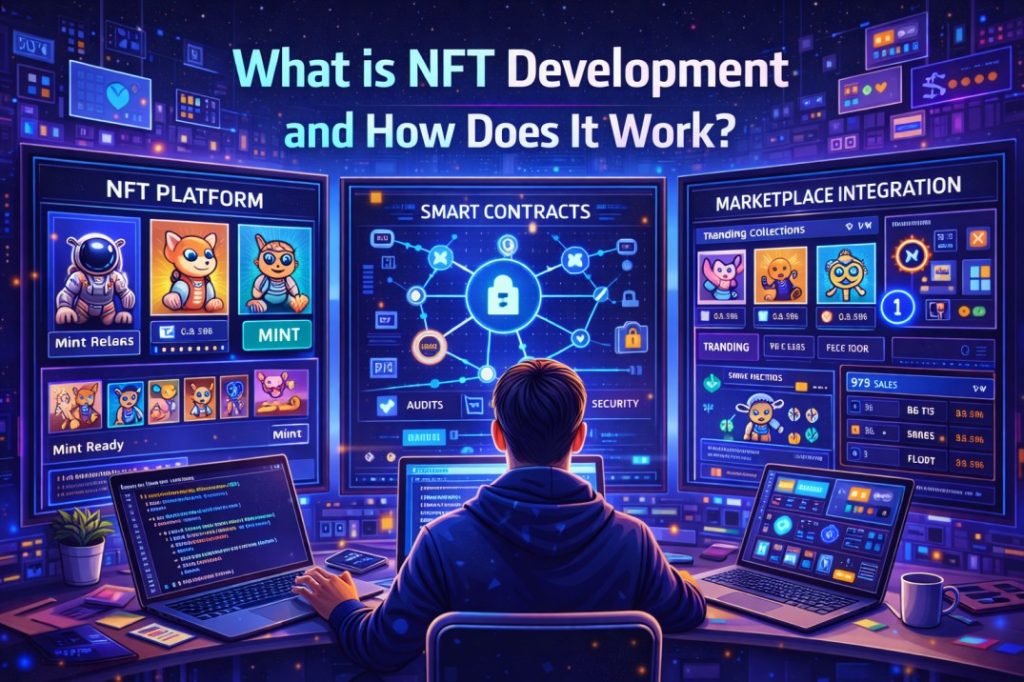
NFT development typically involves building:
- NFT tokens on blockchain networks
- smart contracts to manage ownership and transactions
- NFT marketplaces for buying and selling digital assets
- digital platforms that allow users to mint and manage NFTs
Through blockchain technology, NFTs provide transparent ownership records and secure digital asset management.
How NFTs Work
NFTs operate using blockchain technology, which records all transactions in a decentralized and transparent ledger.
The process generally follows several steps.
Token Creation
Developers create NFTs using smart contracts on blockchain networks such as Ethereum or other compatible platforms. These tokens contain unique identifiers that distinguish them from other tokens.
Metadata Storage
Each NFT includes metadata that describes the asset it represents. This may include details such as the creator, asset description, image files, or other digital information.
Minting Process
Minting is the process of converting a digital file into an NFT recorded on the blockchain. Once minted, the token becomes part of the blockchain ledger and can be transferred or sold.
Ownership Verification
Blockchain technology records the ownership history of each NFT. Anyone can verify who owns the token by checking the blockchain.
Trading and Transfers
NFTs can be bought, sold, or transferred through NFT marketplaces or decentralized platforms.
Key Components of NFT Development
Building an NFT platform or ecosystem requires several technical components.
Blockchain Network
NFTs are deployed on blockchain networks that support smart contracts. These networks provide security, transparency, and decentralization.
Smart Contracts
Smart contracts manage the logic behind NFTs. They define how tokens are created, transferred, or sold.
NFT Marketplace
NFT marketplaces allow users to mint, buy, sell, and trade NFTs in a digital marketplace environment.
Digital Wallet Integration
Users need blockchain wallets to store NFTs and perform transactions.
Metadata and Storage
NFT metadata is usually stored using decentralized storage solutions to ensure accessibility and permanence.
Popular Use Cases of NFT Development
NFT development has expanded beyond digital art and collectibles into many industries.
Digital Art
Artists can tokenize artwork as NFTs and sell them directly to collectors.
Gaming Assets
NFTs can represent in-game assets such as characters, weapons, or virtual land.
Music and Media
Musicians and content creators use NFTs to distribute and monetize digital media.
Virtual Real Estate
NFTs can represent ownership of digital land in virtual environments.
Collectibles
Digital collectibles, trading cards, and limited-edition items are commonly tokenized as NFTs.
Benefits of NFT Development
NFT development offers several advantages for creators, businesses, and digital platforms.
True Digital Ownership
Blockchain technology ensures that ownership of digital assets can be verified.
Transparency
All NFT transactions are recorded on a public blockchain, making them transparent.
Creator Monetization
NFTs allow creators to sell digital assets directly to their audiences.
Global Accessibility
Anyone with internet access and a digital wallet can participate in NFT marketplaces.
Programmable Assets
Smart contracts allow creators to define rules such as royalties for secondary sales.
The Future of NFT Development
NFT technology continues to evolve as new use cases emerge across industries. Future developments may include:
- NFT integration in gaming ecosystems
- tokenized digital identities
- NFT-based ticketing systems
- decentralized digital asset management platforms
As blockchain adoption grows, NFTs may become an important part of digital ownership and online economies.
Conclusion
NFT development plays a key role in enabling unique digital ownership within the blockchain ecosystem. By combining smart contracts, decentralized storage, and blockchain networks, NFTs allow creators and businesses to tokenize digital assets and create new economic models.
As Web3 technologies continue to expand, NFT development is expected to support new applications across art, gaming, media, and digital platforms, helping reshape how digital assets are created, owned, and traded.


