

Blockchain technology has introduced a new way of executing agreements without relying on intermediaries. One of the most important innovations behind this shift is the smart contract self-executing code that runs on blockchain networks.
As businesses and Web3 projects continue to explore decentralized solutions, smart contract development services have become essential for building secure, automated, and transparent applications. From decentralized finance (DeFi) platforms to NFT marketplaces, smart contracts power a wide range of blockchain-based systems.
This article explains what smart contract development services are, their key benefits, real-world use cases, and how the development process works.
What Are Smart Contract Development Services?
Smart contract development services refer to the process of designing, developing, testing, and deploying self-executing contracts on blockchain networks. These contracts automatically enforce rules and execute actions when predefined conditions are met.
Unlike traditional agreements that require intermediaries such as banks or legal institutions, smart contracts operate on decentralized networks, ensuring transparency and trust between participants.
These services typically include:
- writing and deploying smart contract code
- integrating contracts with blockchain platforms
- testing and auditing for security
- optimizing performance and scalability
Smart contracts are commonly built on blockchain platforms that support programmable logic, enabling developers to create decentralized applications (dApps) and automated systems.
How Smart Contracts Work
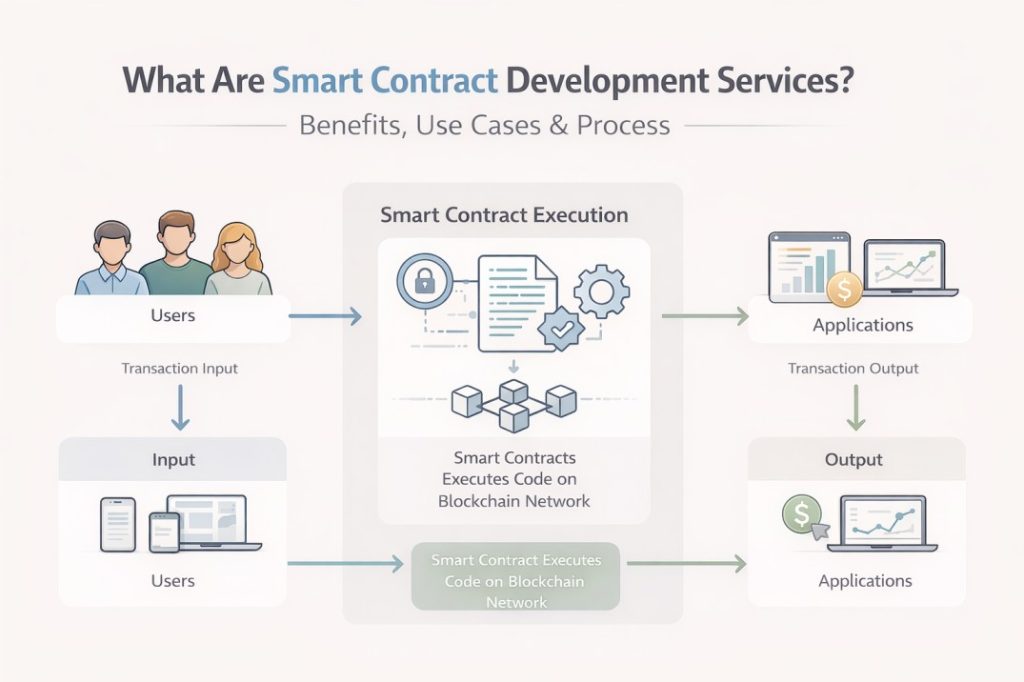
Smart contracts function as programmable logic stored on a blockchain. Once deployed, they run automatically when specific conditions are satisfied.
For example, a smart contract can be programmed to release payment only when a service is completed. When the condition is verified, the contract executes the transaction without requiring manual intervention.
Because smart contracts operate on blockchain networks:
- transactions are transparent and verifiable
- execution is automatic and tamper-resistant
- data is stored securely across decentralized nodes
This automation reduces the need for intermediaries and increases efficiency in digital transactions.
Key Benefits of Smart Contract Development Services
Automation and Efficiency
Smart contracts eliminate the need for manual processing by automating workflows. Tasks such as payments, approvals, and data verification can be executed instantly once conditions are met. This reduces delays and improves operational efficiency across systems.
Transparency and Trust
All smart contract transactions are recorded on a blockchain, making them visible and verifiable. This transparency builds trust among participants, as all parties can independently verify the contract’s execution and outcomes.
Enhanced Security
Smart contracts use cryptographic security provided by blockchain networks. Once deployed, the code cannot be easily altered, reducing the risk of fraud or unauthorized changes. Proper auditing further strengthens contract reliability.
Cost Reduction
By removing intermediaries such as brokers or third-party services, smart contracts can significantly reduce operational costs. This makes them an efficient solution for businesses looking to streamline processes.
Accuracy and Reliability
Because smart contracts execute predefined logic, they minimize human errors that can occur in manual processes. This ensures consistent and reliable outcomes for transactions and agreements.
Use Cases of Smart Contract Development Services
Decentralized Finance (DeFi)
Smart contracts are widely used in DeFi platforms to automate financial transactions such as lending, borrowing, trading, and yield farming. They enable users to interact directly with financial systems without intermediaries.
NFT Platforms
NFT marketplaces rely on smart contracts to manage the creation, ownership, and transfer of digital assets. These contracts also enable features such as royalties for creators on secondary sales.
Supply Chain Management
Smart contracts can track goods and automate processes in supply chains. They ensure transparency by recording each stage of the product journey, reducing fraud and improving efficiency.
Digital Identity Verification
Smart contracts can be used to manage secure digital identities. They allow users to control and verify their identity without relying on centralized authorities.
Gaming and Virtual Assets
Blockchain-based games use smart contracts to manage in-game assets, ownership, and transactions. Players can securely trade or transfer digital assets within decentralized ecosystems.
Smart Contract Development Process
Requirement Analysis
The first step involves understanding the project requirements, including the purpose of the smart contract, its functionality, and the target blockchain platform.
Design and Architecture
Developers design the structure and logic of the smart contract. This includes defining how the contract will behave, what conditions it will check, and how it will interact with users or systems.
Development and Coding
Smart contracts are written using programming languages suitable for blockchain platforms. The code defines the rules and automated processes that the contract will execute.
Testing and Auditing
Testing is a critical step to ensure the contract works as expected. Security audits are conducted to identify vulnerabilities and ensure the contract is safe from potential exploits.
Deployment
Once tested, the smart contract is deployed on the blockchain network. After deployment, it becomes immutable and begins executing according to its programmed logic.
Maintenance and Updates
Although smart contracts are immutable, developers may create updated versions or integrate them with new features as the project evolves.
Challenges in Smart Contract Development
While smart contracts offer many advantages, there are also challenges to consider.
Security Risks
Vulnerabilities in smart contract code can lead to potential exploits if not properly audited.
Complexity
Developing secure and efficient smart contracts requires specialized technical expertise.
Scalability
Handling large volumes of transactions can be challenging for some blockchain networks.
Irreversibility
Once deployed, smart contracts cannot be easily modified, making thorough testing essential.
The Future of Smart Contract Development
As blockchain technology continues to evolve, smart contracts are expected to become more advanced and widely adopted.
Future trends may include:
- multi-chain smart contract solutions
- integration with AI for automated decision-making
- improved scalability and performance
- wider adoption across industries such as finance, healthcare, and logistics
These developments will further expand the role of smart contracts in digital ecosystems.
Conclusion
Smart contract development services play a crucial role in enabling automation, transparency, and security within blockchain systems. By eliminating intermediaries and executing transactions automatically, smart contracts are transforming how digital agreements are managed.
From DeFi platforms to NFT marketplaces and beyond, smart contracts are powering a wide range of Web3 applications. As the technology continues to evolve, businesses and developers can leverage smart contract development to build efficient, secure, and scalable blockchain solutions


