

Blockchain technology has revolutionized how digital assets are created and managed. One of its most impactful applications is blockchain token development, which allows businesses, startups, and developers to create custom tokens for various use cases such as payments, governance, fundraising, and decentralized applications.
From DeFi platforms to NFT ecosystems, tokens play a critical role in powering blockchain-based systems. However, creating a token involves more than just writing code it requires careful planning, technical expertise, and a clear understanding of the blockchain ecosystem.
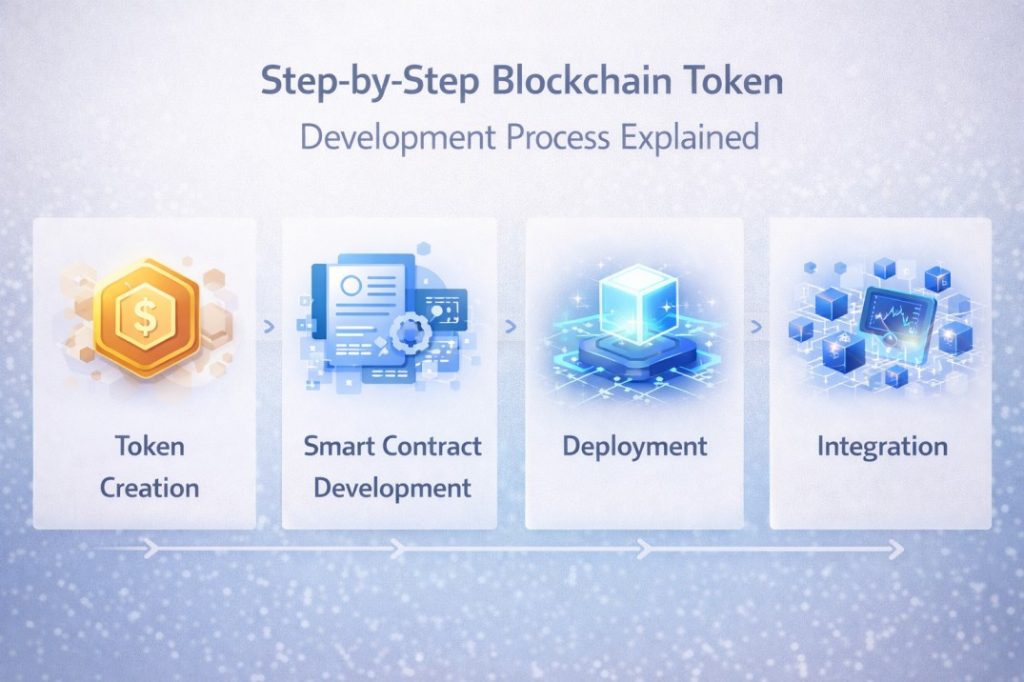
In this guide, we break down the step-by-step blockchain token development process, helping you understand how tokens are created and launched successfully.
What Is Blockchain Token Development?
Blockchain token development refers to the process of creating digital tokens on a blockchain network. These tokens can represent assets, utility functions, governance rights, or even access to specific services within a decentralized platform.
Unlike cryptocurrencies that operate on their own blockchains, tokens are typically built on existing networks such as Ethereum or other compatible platforms. This allows developers to leverage existing infrastructure while focusing on the functionality of the token.
Step-by-Step Blockchain Token Development Process
Step 1: Define the Purpose of the Token
The first and most important step in blockchain token development is identifying the purpose of the token. Without a clear use case, the token may lack value and relevance within the ecosystem.
Projects need to determine whether the token will be used for:
- utility within a platform
- governance and voting
- fundraising or investment
- rewards and incentives
A well-defined purpose ensures that the token aligns with the overall goals of the project and provides value to its users.
Step 2: Choose the Right Blockchain Platform
Selecting the appropriate blockchain platform is crucial for token development. Different blockchains offer varying levels of scalability, security, and transaction costs.
Common considerations include:
- network performance and speed
- transaction fees
- developer ecosystem and support
- compatibility with smart contracts
Choosing the right platform ensures that the token operates efficiently and meets the project’s technical requirements.
Step 3: Select Token Standards
Token standards define how tokens behave and interact within a blockchain ecosystem. These standards ensure compatibility with wallets, exchanges, and decentralized applications.
Popular token standards include:
- ERC standards for Ethereum-based tokens
- BEP standards for Binance Smart Chain
- other blockchain-specific token frameworks
Selecting the right standard simplifies integration and improves user accessibility.
Step 4: Design Tokenomics
Tokenomics refers to the economic model behind the token, including its supply, distribution, and utility. A strong tokenomics model is essential for long-term sustainability.
Key factors to consider:
- total token supply
- distribution strategy
- reward mechanisms
- inflation or deflation models
Well-designed tokenomics help maintain value and encourage user participation.
Step 5: Develop Smart Contracts
Smart contracts are the backbone of blockchain token development. They define how the token functions, including transfers, ownership, and interactions.
During this stage, developers:
- Write the smart contract code
- Implement token logic and rules
- ensure compatibility with the chosen token standard
Smart contracts must be carefully developed to ensure accuracy and security.
Step 6: Testing and Security Audits
Before launching the token, thorough testing is essential to identify potential issues. This includes functional testing, performance testing, and security audits.
Security audits help detect vulnerabilities in the smart contract code and reduce the risk of exploits. This step is critical for building trust and ensuring the reliability of the token.
Step 7: Deployment on Blockchain
Once testing is complete, the token is deployed on the blockchain network. Deployment makes the token publicly accessible and allows users to interact with it.
After deployment:
- The token becomes part of the blockchain ledger
- transactions can be executed
- Users can store tokens in compatible wallets
This step marks the official launch of the token.
Step 8: Integration with Wallets and Platforms
After deployment, the token must be integrated with wallets, exchanges, and decentralized applications. This ensures usability and accessibility for users.
Integration allows users to:
- store tokens securely
- transfer tokens
- interact with blockchain applications
This step is essential for real-world adoption.
Step 9: Launch and Promotion
Launching a token involves introducing it to the market and building awareness. While development is complete, adoption depends on how well the token is presented to the community.
Projects often focus on:
- community engagement
- educational content
- ecosystem partnerships
A strong launch strategy helps attract users and build momentum.
Benefits of Blockchain Token Development
Blockchain token development offers several advantages:
Decentralization
Tokens operate on decentralized networks, reducing reliance on central authorities.
Transparency
All transactions are recorded on the blockchain, ensuring visibility and trust.
Efficiency
Automation through smart contracts reduces manual processes and improves speed.
Flexibility
Tokens can be designed for various use cases, including payments, governance, and rewards.
Challenges in Blockchain Token Development
Despite its benefits, token development also comes with challenges:
Security Risks
Smart contract vulnerabilities can lead to potential exploits if not properly audited.
Regulatory Uncertainty
Different regions have varying regulations regarding digital assets.
Scalability Issues
Some blockchain networks may face limitations in handling large transaction volumes.
The Future of Blockchain Token Development
As Web3 ecosystems continue to evolve, blockchain token development is expected to expand across industries. Future trends may include:
- multi-chain token ecosystems
- integration with AI-driven systems
- tokenized real-world assets
- enhanced interoperability between blockchains
These developments will further strengthen the role of tokens in digital economies.
Conclusion
Blockchain token development is a fundamental process that enables the creation of digital assets within decentralized ecosystems. By following a structured approach, from defining the token’s purpose to deployment and integration projects can build secure and scalable tokens.
Understanding the step-by-step blockchain token development process helps businesses and developers navigate the complexities of Web3 and create tokens that deliver real value.
As blockchain adoption grows, token development will continue to play a key role in shaping the future of digital finance and decentralized applications.


