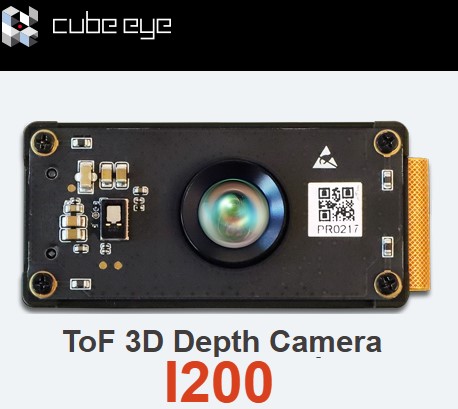
3D vision systems have become an important part of modern industrial automation. Cube-eye Industrial 3D cameras are used for robotic handling, inspection, conveyor tracking, logistics automation, and quality control applications. Machines must accurately detect object depth, size, and position to improve productivity and maintain consistent performance.
Traditional sensors often struggle to provide reliable results in fast-moving industrial environments, especially when handling small, irregular, or moving objects. Cube-eye time-of-flight sensor technology helps overcome these challenges by delivering fast, stable, and accurate real-time 3D depth sensing for advanced automation systems.
Challenges with Traditional 3D Imaging Systems
Pattern Projection Cameras – Pattern projection cameras calculate depth by projecting light patterns onto objects. These systems offer good measurement accuracy but operate at slower speeds because they require multiple image captures.
- Require stationary objects during scanning
- Slower processing in dynamic environments
- Difficult installation in robotic systems
- Light projection can be blocked by robotic arms
- Less suitable for continuous automation processes
Stereo Vision Cameras – Stereo vision cameras use two lenses to calculate depth information from different viewpoints. They support continuous imaging and compact integration into automation equipment.
- Depth accuracy may vary in complex environments
- High processing requirements increase system load
- Reduced stability when detecting small objects
- Additional computing resources may be needed
How Cube-eye Time-of-Flight Technology Works
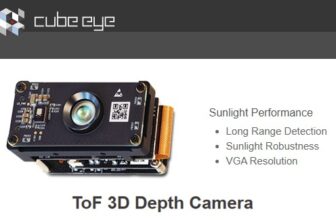
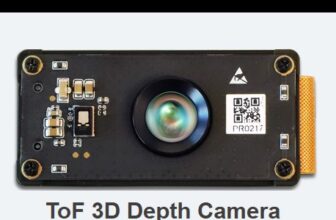
Cube-eye Time-of-Flight (ToF) cameras measure the time infrared light takes to travel to an object and return to the sensor. This direct depth measurement method allows fast and stable 3D imaging without complicated processing.
The technology delivers accurate real-time depth information, making it highly effective for industrial automation and robotic applications.
- ToF cameras capture real-time 3D depth data at more than 30 frames per second, supporting smooth and continuous industrial operations.
- The cameras maintain reliable depth accuracy for moving, small, or irregular objects commonly used in manufacturing and logistics systems.
- Built-in depth processing minimizes the need for powerful external computing systems and improves overall automation efficiency.
- These cameras support standard industrial interfaces, including USB, MIPI, and PoE, enabling simple integration with robots, conveyors, and machine vision systems.
- The cameras perform consistently in both bright and low-light conditions, ensuring dependable operation across different industrial environments.
Click here if you are interested in the Cube-eye ToF 3D camera.
View More: Overcoming Traditional 3D Imaging Challenges with Time-of-Flight Camera Technology